
About our food processing business
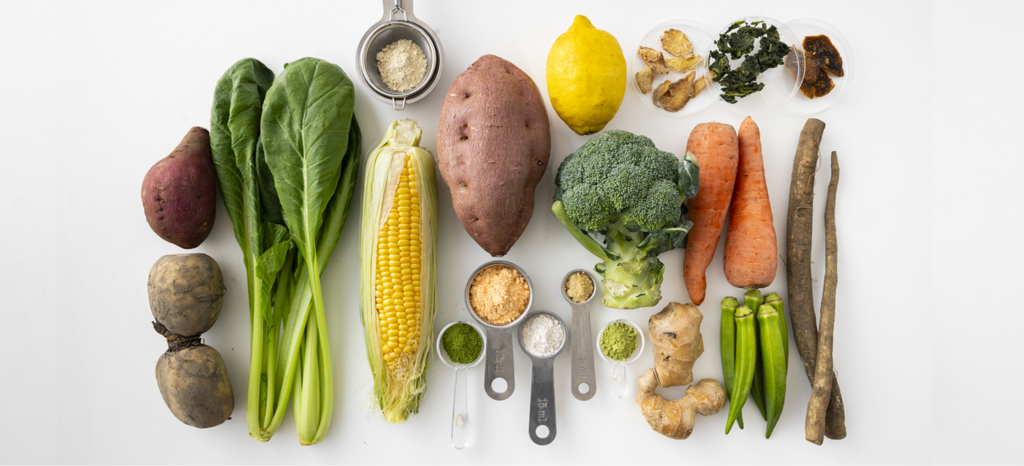
Overview of food processing business
Vegetable fine powders: meeting new food needs
In this era of abundant food, modern people are not maintaining well-balanced diets due to various factors. In particular, the average consumption of vegetables and fruits has been decreasing year by year, and it is said that insufficient intake is especially notable among young people in their 20s and 30s.
We at Mikasa Sangyo have developed “vegetable fine powders”—whole vegetables in powdered form—by combining “ultra-fine pulverization technology” cultivated through R&D with our experience and track record of being engaged in maintaining and enhancing the agricultural environment over many years.
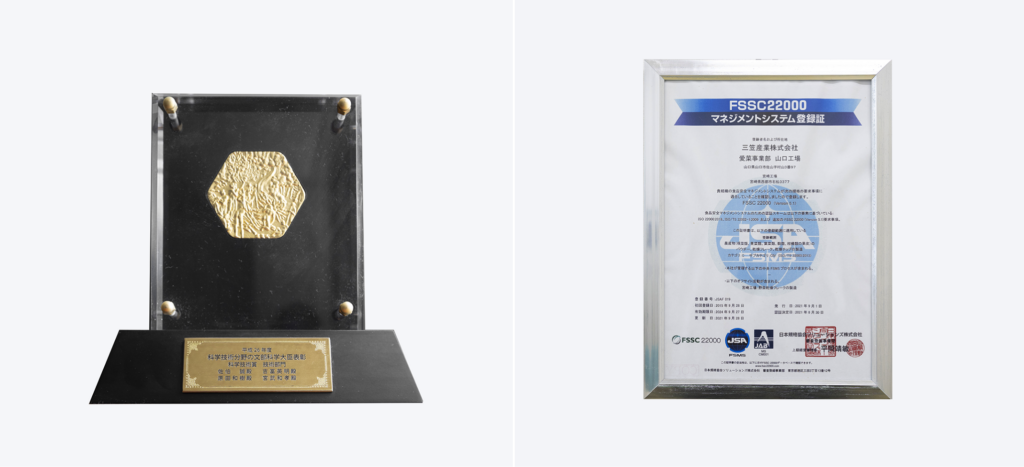
Minister of Education, Culture, Sports, Science and Technology Award
We received the Minister of Education, Culture, Sports, Science and Technology Award (Science and Technology) in 2014 in recognition of our “Development of Manufacturing Technology for Vegetable Powders with High Oxygen Radical Absorbance Capacity.”
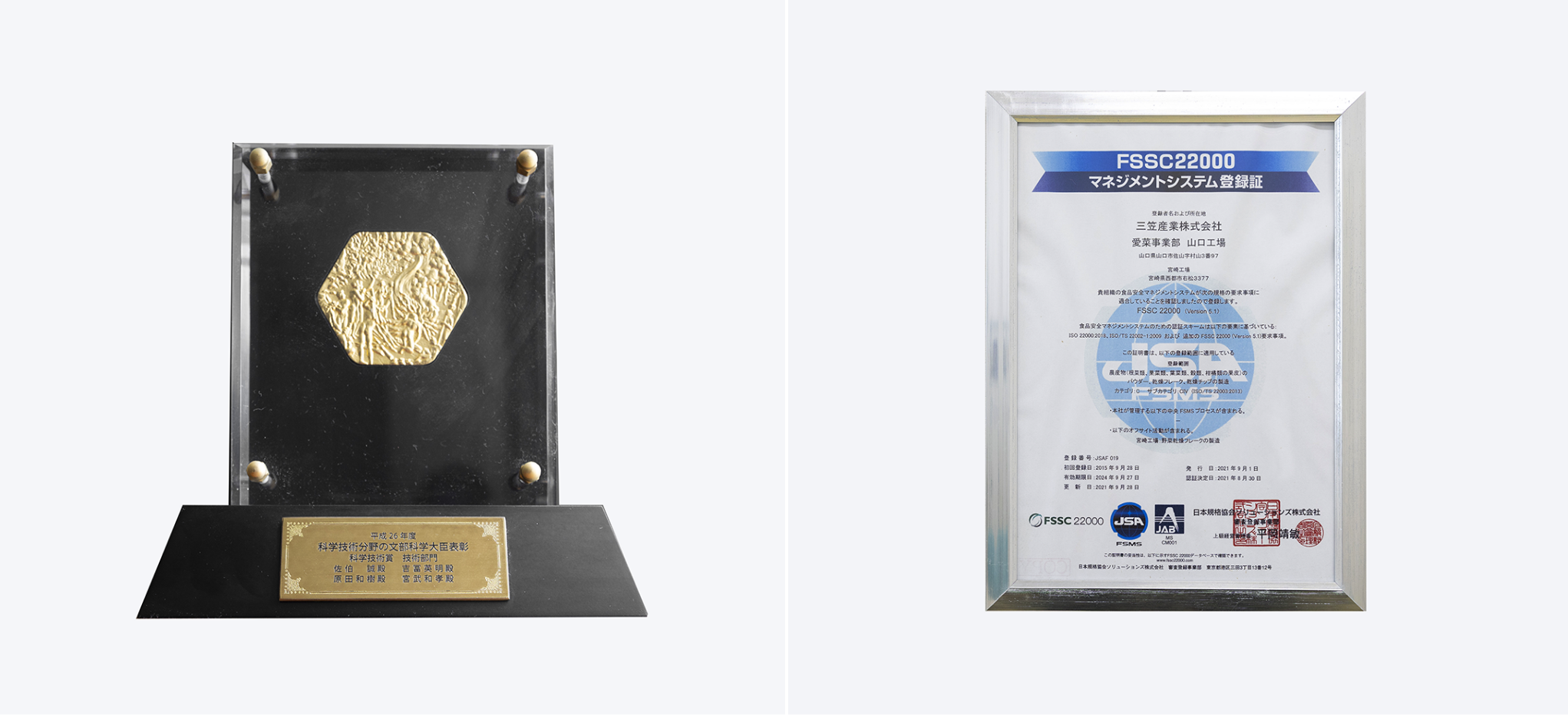
FSSC 22000 certification
Our Yamaguchi Plant, which produces vegetable fine powder and other products, has been recognized for its establishment of a food safety management system through certification as an ISO 22000 Compliant Facility in November 2010, and as an FSSC 22000 Certified Plant in September 2015, which requires even more stringent auditing than ISO.
* FSSC 22000: Food Safety System Certification 22000
[Reference materials]
“About Food Safety Management Systems,” prepared by the Japanese Standards Association (pdf, in Japanese)
Website of FSSC 22000 Headquarters (English top page)
Website of FSSC 22000 Headquarters (Scheme document in Japanese)
History of vegetable-related product development
- Jan. 2004
- Began sales of vegetable fine powders.
- Nov. 2010
- Began sale of Ashitaba Soap.
- Oct. 2018
- Began sales of vegetable tablets “Vege Charge – 12 Types of Vegetables.”
- Oct. 2018
- Began sales of vegetable tablets “Vege Charge -– Renkon (Lotus Root).”
- Oct. 2018
- Began sales of vegetable tablets “Vege Charge – Shoga.”
- Dec. 2019
- Began sales of mixed vegetable powder “Vegetable Plus for Children.”
- Sep. 2020
- Began sales of mixed vegetable powder “Vegetable Plus for Yogurt.”
Charitable activities, sponsorship activities
As a company that delivers safe and secure food products, we at Mikasa Sangyo regard supporting and cooperating with food education and child-rearing activities, primarily in Yamaguchi Prefecture, as an important part of our business.
[Main activities]
・We joined the Yamaguchi Children and Child-rearing Support Consortium in January 2024. Our activities are aimed at promoting use of vegetable fine powders in child-rearing households from the aspect of food, in areas such as time-saving, convenience, and food education.
・We held our first baby food class in collaboration with the child-rearing support organization Child and Family Support Center Kaihoku. The lectures in this class covered “takikomi gohan (seasoned rice with vegetables/meat) without a knife” and “easy oyaki (Japanese dumpling) with vegetable fine powder.”
About vegetable fine powders
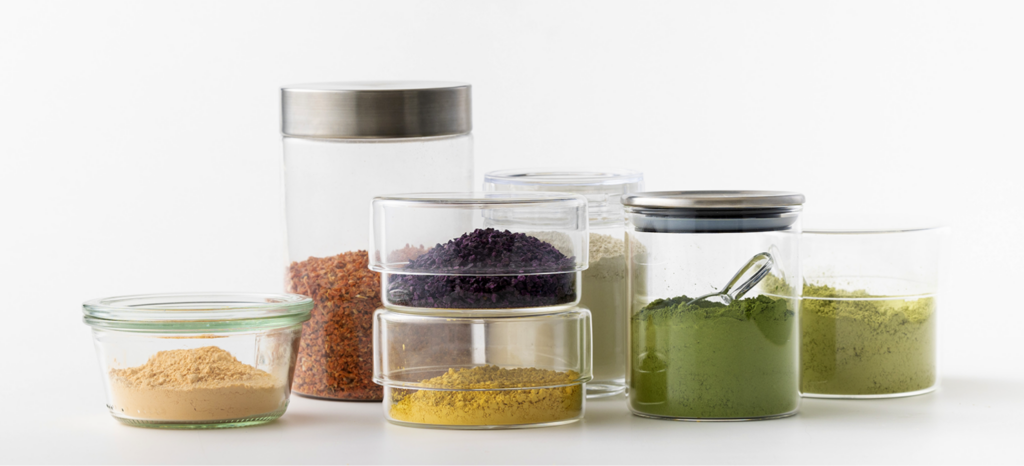
Concept
The fine powders we deliver are food products rich in nutrients such as dietary fiber, minerals, and vitamins—made by powdering whole Japan-produced vegetables. This allows people to conveniently and easily consume vegetables that tend to be lacking in modern diets in a balanced way.
*Mikasa Sangyo’s vegetable fine powders are dried vegetables ground to the micrometer level.
1 μm (micrometer) = 1/1000th of 1 mm


Features, Three key points
1. 100% Japan-produced vegetables,from additives and allergen-free (by Japanese standards)
・High nutritional value and good flavor are essential of course, but safety is also an important aspect of quality.
・We use only high-quality Japan-grown vegetables from trusted producers, carefully selecting our vegetable ingredients primarily from contract cultivators throughout Japan.
・Accurate traceability.
・Since no additives are used, customers can enjoy the true taste of the vegetables, and can use the products with peace of mind in children’s meals.
・Ingredients containing allergens are never brought into the plant.
2. Micropowders using natural ingredients
・The vegetables are sterilized using superheated steam, so they can be eaten without heating. Furthermore, the umami and flavor of the vegetables are enhanced, and the color of the vegetables does not fade.
・With an average particle diameter of 20 μm, smaller than the particle size perceptible on the tongue, a new texture is created that feels like the powder melts on the tongue.
・Using our air-type fine pulverization technology we have created micropowders without compromising the nutritional value, flavor, and taste of the vegetables themselves while maintaining low temperature.
・By turning vegetables into powder, digestion and absorption are improved, and the powders can be expected to see use in baby food, nursing care food, and nutritional supplement ingredients.
3. High economy and efficiency
・Approximately 100 g of fine powder can be produced from 1 kg of raw vegetables.
・Compared to fresh vegetables, there is no waste, reducing impact on the environment.
・Product moisture content is 8% or less. Low moisture content inhibits the growth of microorganisms. Also, the packaging includes an oxygen absorber and uses an aluminum laminated bag to allow long-term storage at room temperature (when unopened).
・Since the product has been heat-treated during the processing stage, it can be efficiently used in the strained state by just mixing with liquid.
Advantages of fine pulverization processing
[Improvement of digestive absorption (Research at the Faculty of Environmental and Symbiotic Sciences, Prefectural University of Kumamoto)]
In joint research with the Faculty of Environmental and Symbiotic Sciences at the Prefectural University of Kumamoto, it was discovered that fine pulverization increases surface area, thereby improving digestive absorption.
This research result was presented at the 51st General Meeting of the Japanese Society of Nutrition and Dietetics and the 59th Meeting of the Kyushu-Okinawa Section of the Japan Society of Nutrition and Food Science.
[Improved texture, New texture]
It is generally said that particles up to 20–30 μm in size can be perceived as granules by the tongue. Therefore, a texture that seems to melt on the tongue can be obtained when foods are fine pulverized to an average particle diameter of 20 μm or less.
1 μm (micrometer) = 1/1000th of 1 mm
[Reduction of added amount]
These powders blend exceptionally well with other materials, allowing for the creation of vibrantly colored products with only a small added amount. This makes it easy to add value to products.


▪ Comparison of vegetable fine powders and paste materials
—High ratio of raw materials and easy storage—
[Vegetable fine powders]
・Easy storage (store away from high temperature, high humidity, and direct sunlight)
・Moisture content is low at 8% or less, so moisture adjustment is easy
[Vegetable paste]
・Needs freezer storage, so it requires securing storage space and the trouble of thawing.
・Moisture adjustment is difficult due to the high moisture content
◉Since vegetable fine powder has been dried to remove moisture from the raw materials, 10 g of powder is equivalent to approximately 70–100 g of fresh raw materials. Therefore, the amount of powder added is approximately one-third to one-tenth that of paste (figures vary depending on the characteristics of the raw materials, etc.).
▪️Comparison of vegetable fine powders and coarse powders
—Improved digestive absorption, good mouthfeel, and high compatibility when added to other foods—
[Vegetable fine powders and coarse powders]
・Particle fineness: Compared to the coarse particles of approximately 70–300 μm, which are the main type used in the food industry at present, the particles of vegetable fine powder are 5–30μm.
・A particle diameter of 10 μm is one-tenth the size of a 100 μm particle diameter, but the surface area within the same volume becomes 100 times larger. Therefore, the area that comes into contact with digestive enzymes in the body increases, improving digestive absorption.
◉ Advantages of ultra-fine pulverization
・Improved digestive absorption
・A mouthfeel that “melts on the tongue” and can be added to any food without creating an unnatural result. Good blendability is another key characteristic
・There are cases where adding 6 g of vegetable fine powder can achieve the same effect as adding 10 g of coarse powder.
Raw material production regions
Japan-produced raw materials 100%
The vegetables that serve as raw materials for our nutrient-rich vegetable fine powders containing vitamins, minerals, and dietary fiber are fresh vegetables grown in open fields, primarily through contract farming.
- Raw material
- Production region
- Spinach
- Miyazaki Prefecture
- Burdock
- Kagoshima Prefecture, Hokkaido Prefecture
- Squash
- Hokkaido Prefecture
- Lotus root
- Yamaguchi Prefecture, Aichi Prefecture, Saga Prefecture
- Carrot
- Nagasaki Prefecture, Hokkaido Prefecture
- Sweet corn
- Hokkaido Prefecture
- Sweet potato
- Kagoshima Prefecture, Kumamoto Prefecture, Miyazaki Prefecture
- “Anno-imo”
(orange-fleshed yam) - Kagoshima Prefecture, Kumamoto Prefecture, Miyazaki Prefecture
- Raw material
- Production region
- Purple sweet potato
- Kagoshima Prefecture, Miyazaki Prefecture
- Ginger
- Kagoshima Prefecture
- Komatsuna
- Miyazaki Prefecture
- Broccoli
- Kagoshima Prefecture, Miyazaki Prefecture
- Ashitaba
- Yamaguchi Prefecture, Kagoshima Prefecture
- Lemon
- Kagoshima Prefecture, Ehime Prefecture
- Yuzu
- Kochi Prefecture, Kagoshima Prefecture
- “Silk Sweet” sweet potato
- Kagoshima Prefecture, Miyazaki Prefecture
Process of making fine powder
-
1.
Harvest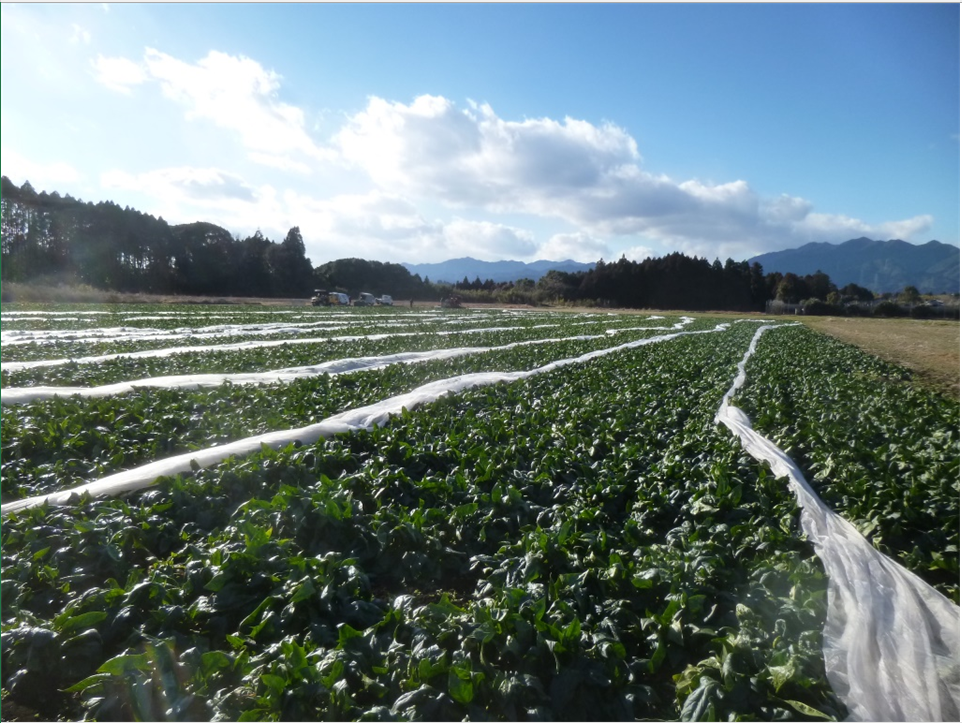
Our fine powders use Japan-produced vegetables as raw materials in all cases. This enables us to provide our customers with safe powder. The photo is a spinach field in Miyazaki Prefecture. Vegetables carefully grown in this way are harvested and become vegetable fine powder.
-
2.
Receipt of fresh vegetable raw materials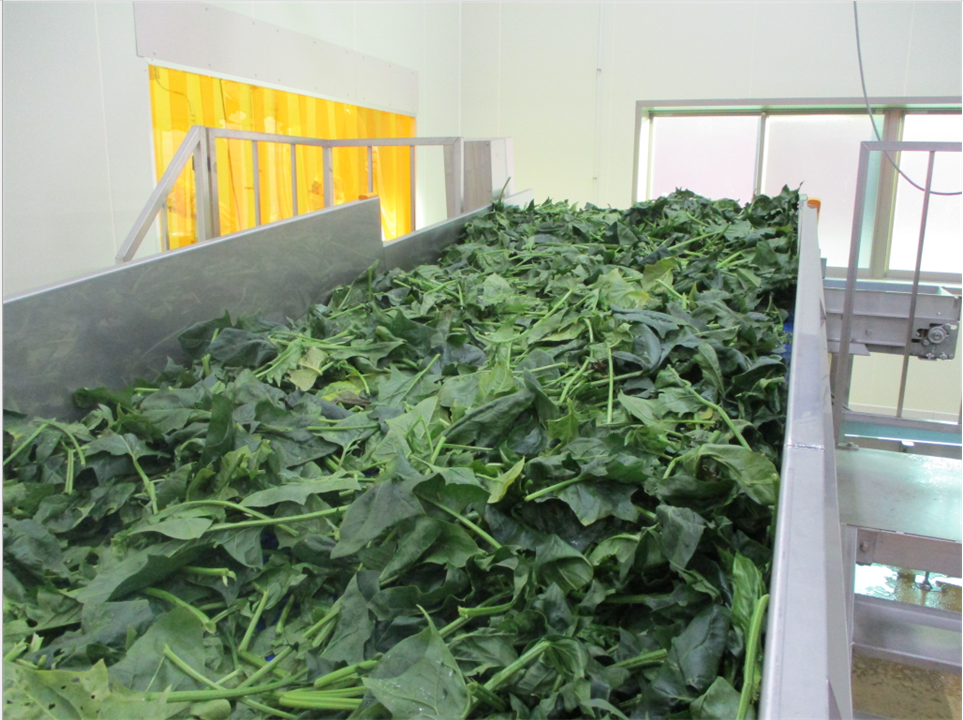
Japan-produced vegetables sent from production regions are processed at our Miyazaki Plant while they are fresh.
-
3.
Pretreatment of vegetables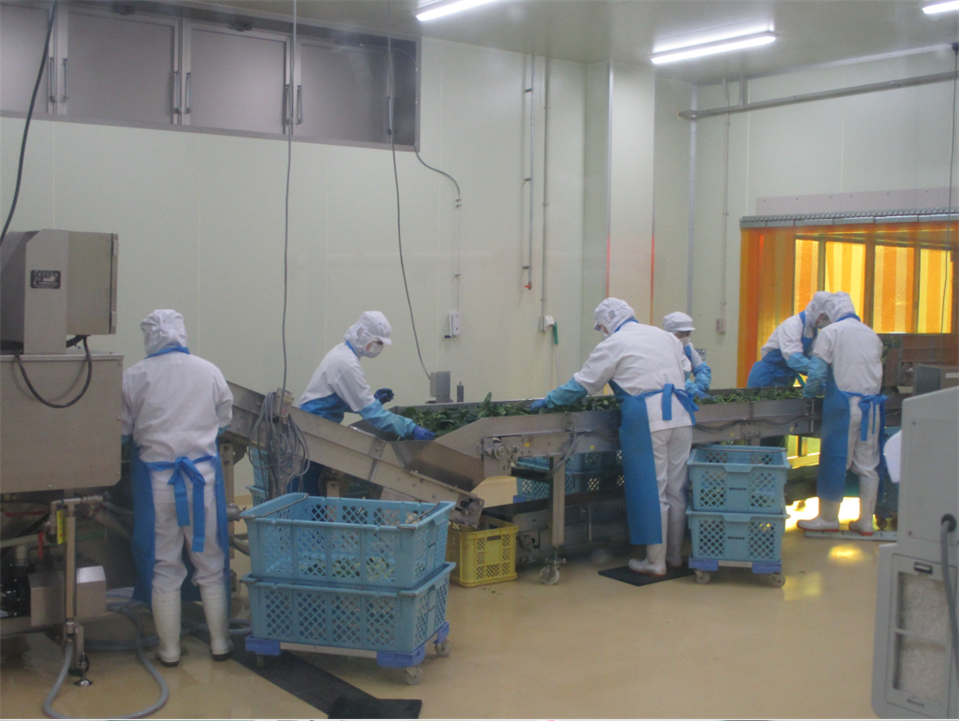
Damaged parts of raw material vegetables are stripped off, and attached insects and other matter are completely removed. Root vegetables are trimmed after thoroughly washing off attached mud.
-
4.
Vegetable cutting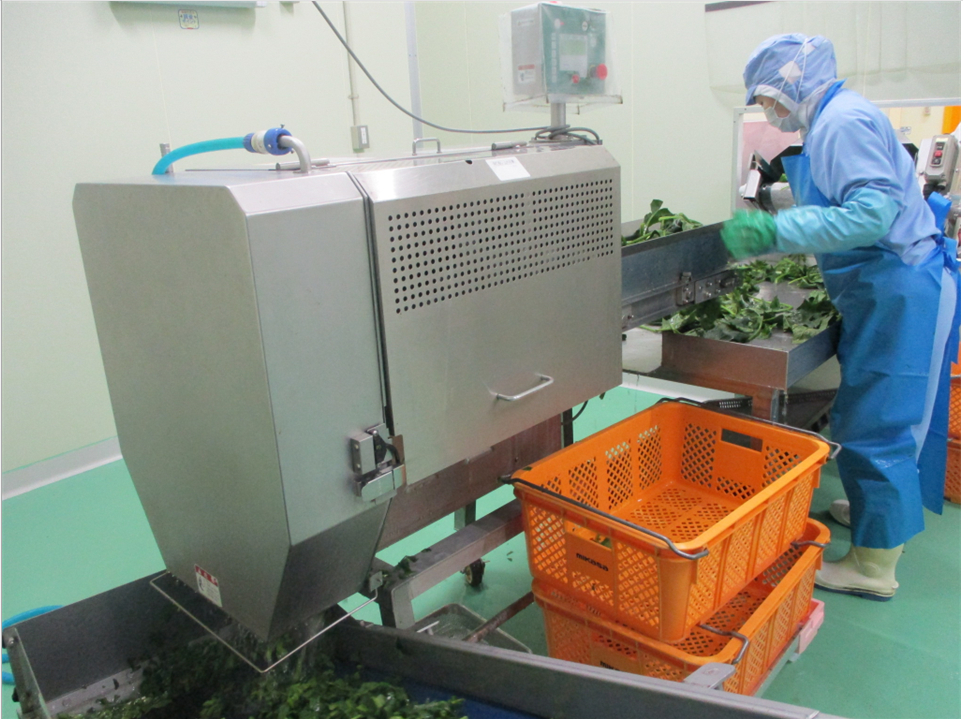
Vegetables are cut to a size suitable for the drying process using special slicers for each vegetable.
-
5.
Vegetable washing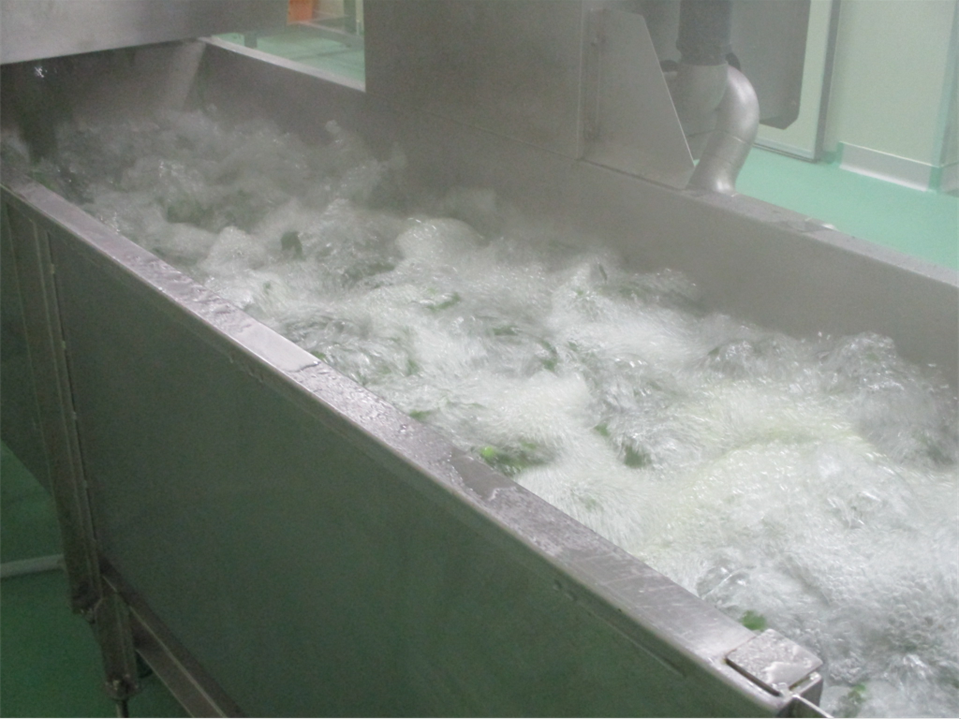
Using a tank-type washing machine, vegetables are continuously rinsed with water while bubbling with air to completely remove dirt and other matter attached to the vegetables.
* The foam is due to bubbling. No detergent is used. -
6.
Sterilization treatment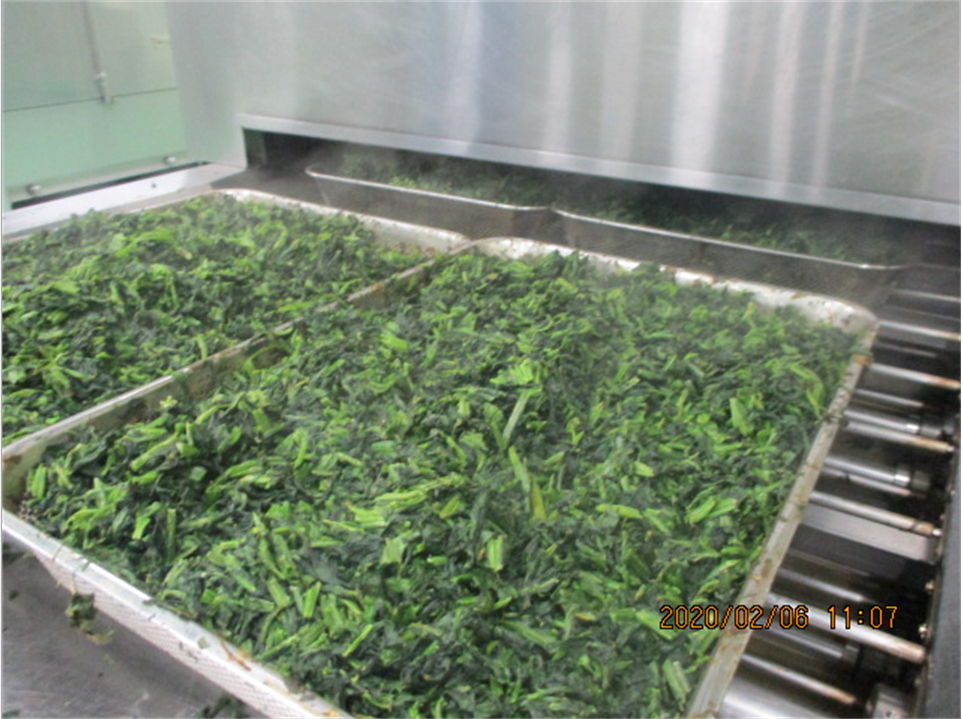
Sterilization is done with a superheated steam sterilizer.
*Cut vegetables are sterilized by applying high-temperature superheated steam. -
7.
Drying treatment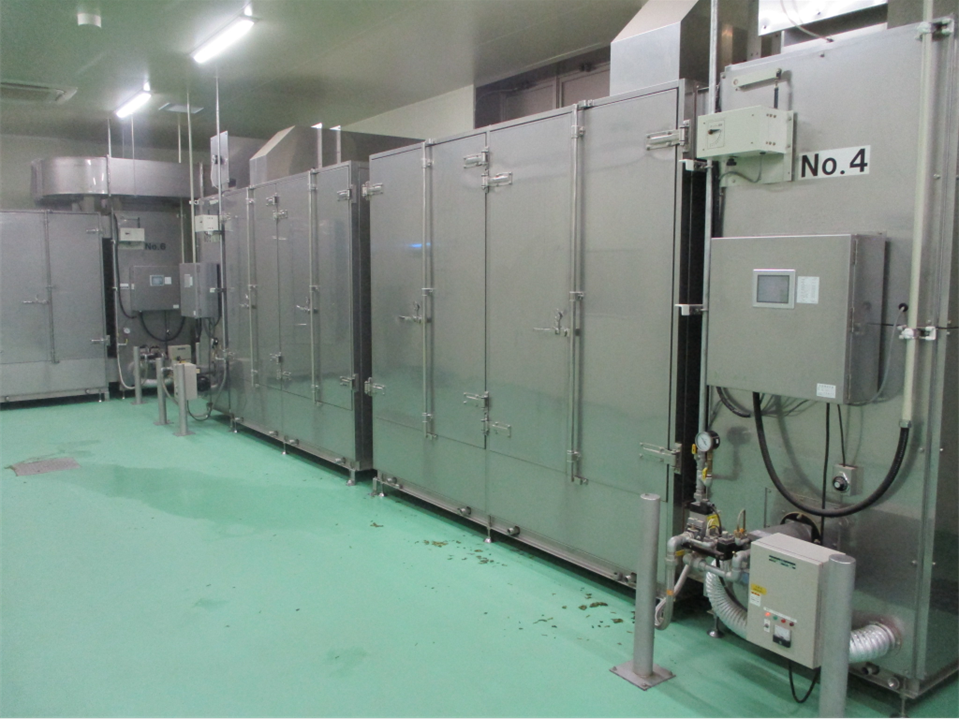
Vegetables are dried with a hot air dryer until the moisture content is at or below 8%.
-
8.
Storage of dried vegetables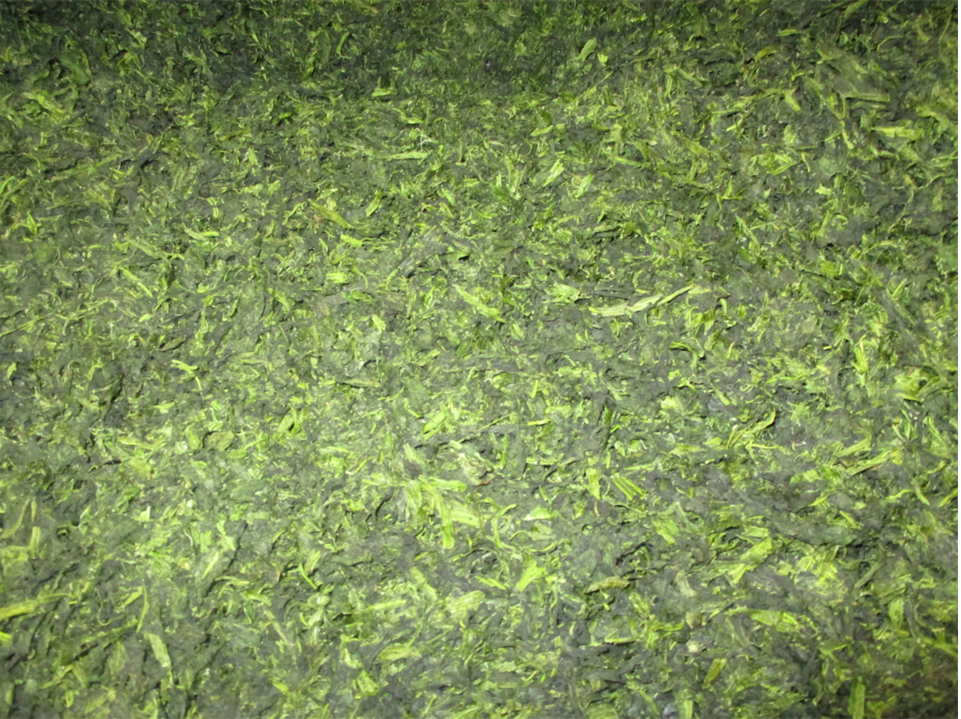
Vegetables are kept in refrigerated storage after drying treatment.
-
9.
Fine pulverization, sieve processing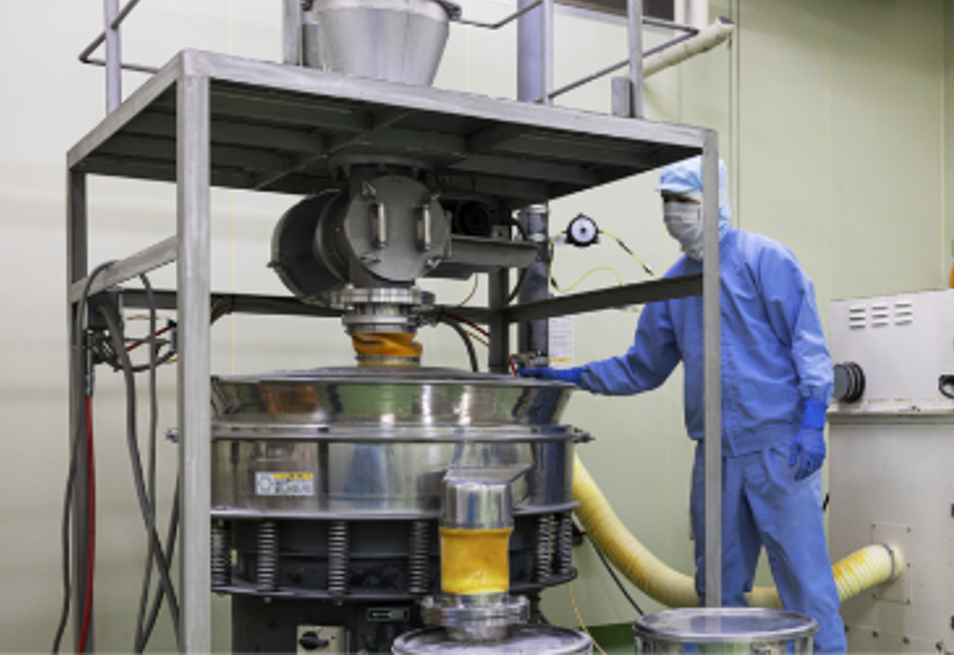
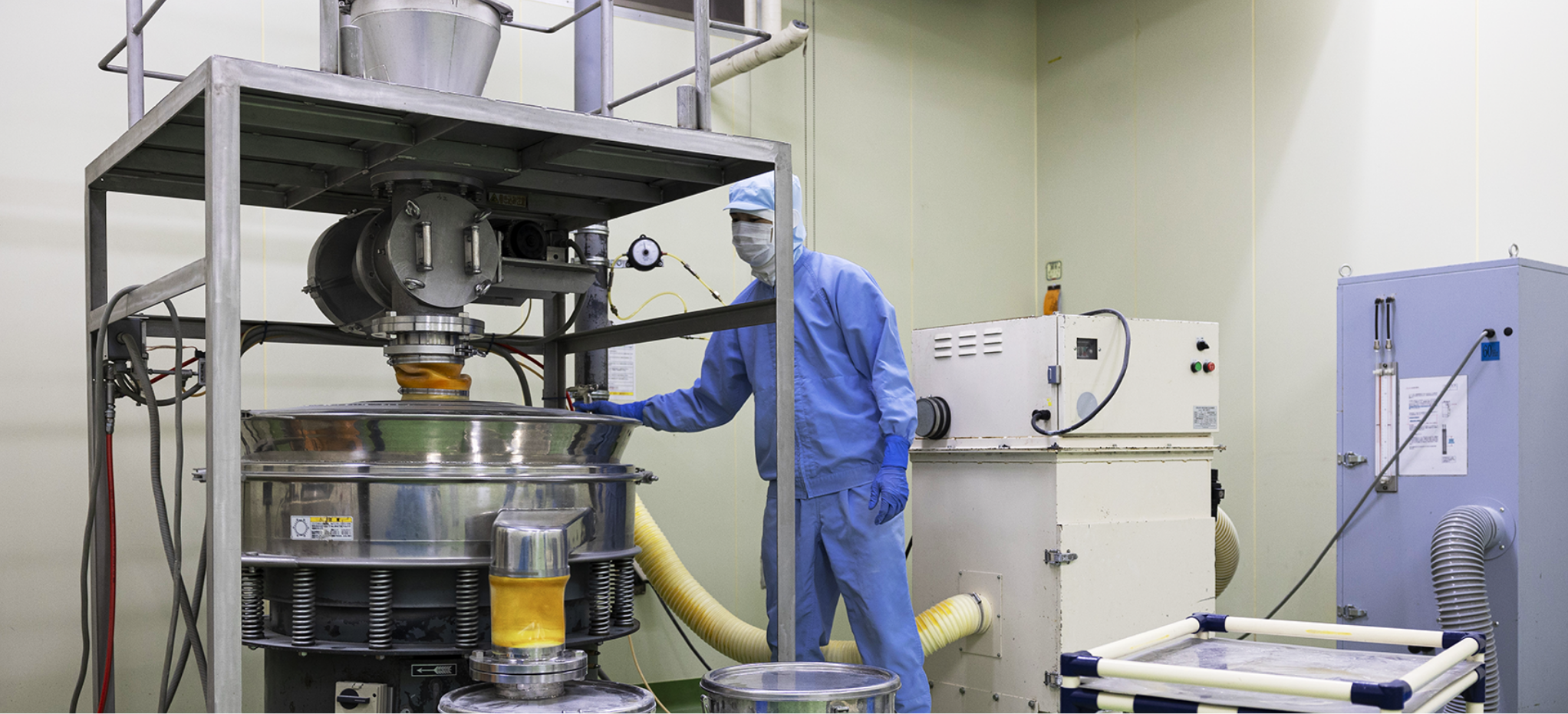
* 10 microns is 1/100th of a millimeter. These powders have a melting mouthfeel melt when placed on the tongue. Furthermore, because the vegetables are pulverized by air flow, their temperature does not rise, allowing for fine pulverization without destroying nutrients.
-
10.
Weighing and filling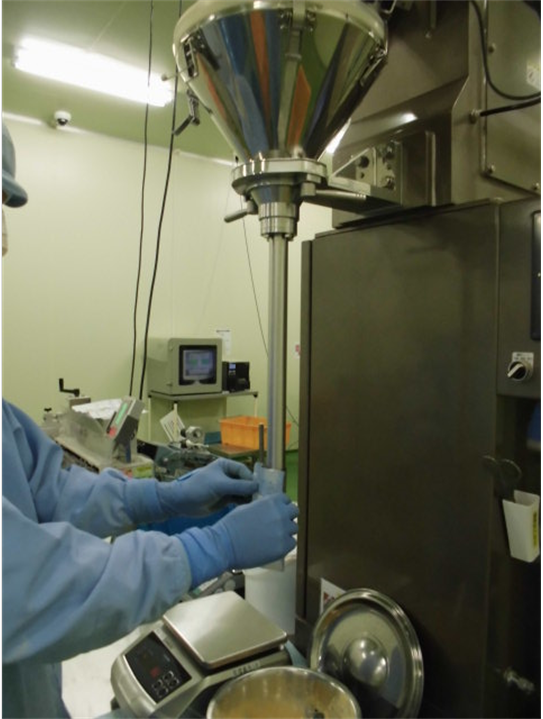
The finished powder is weighed while being filled into aluminum laminate bags. Then immediately after inserting an organic oxygen absorber, the aluminum laminate bag is completely sealed with heat sealing, and the expiration date is printed.
-
11.
Foreign matter inspection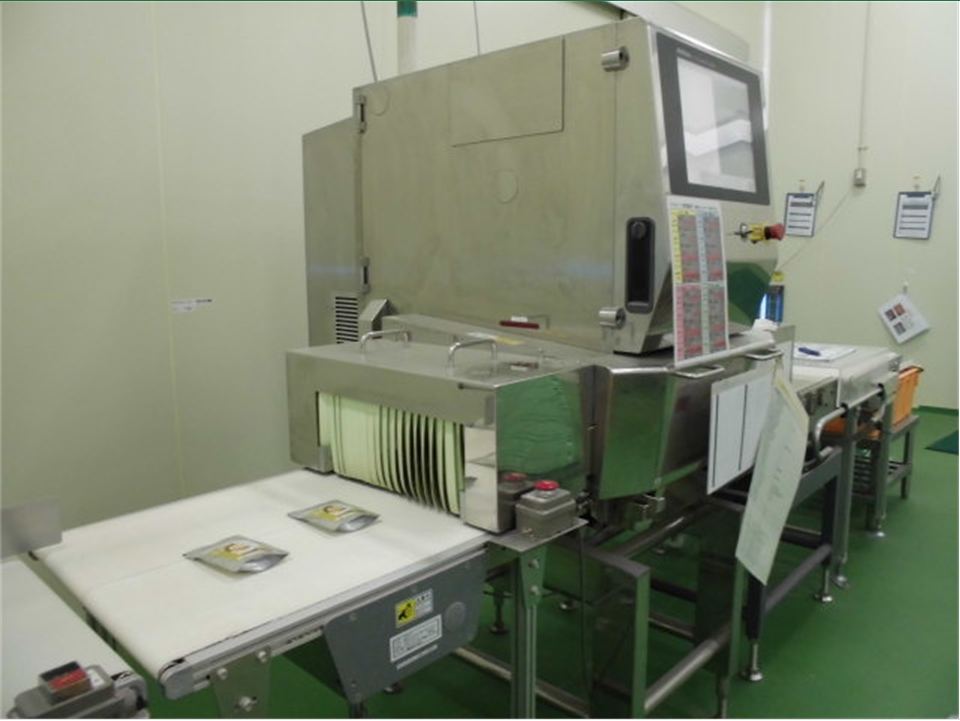
The absence of foreign matter contamination is confirmed using an X-ray foreign matter inspection machine.
-
12.
Product inspection
Products are inspected based on product standards and inspection procedures. (Sensory inspection, average particle diameter, moisture content, hygiene inspection)
-
13.
Packaging and shipment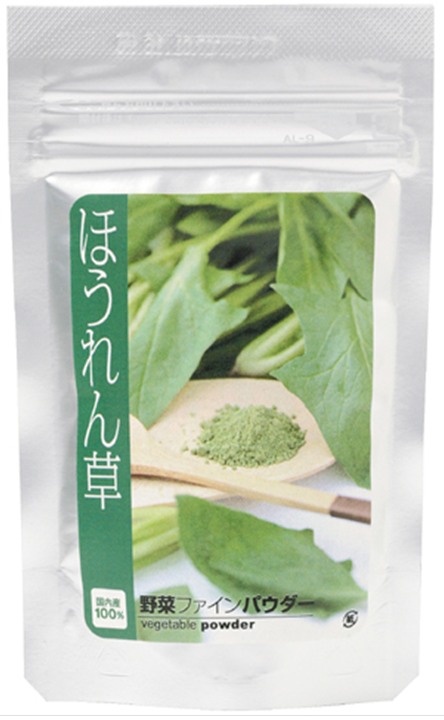
In this way, we deliver safe and secure vegetables powders for use by everyone.