
About our functional chemistry business
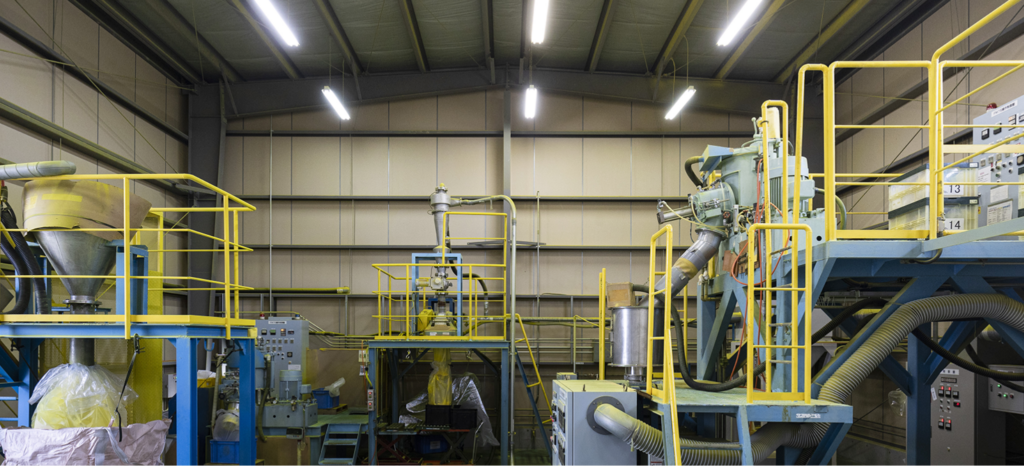
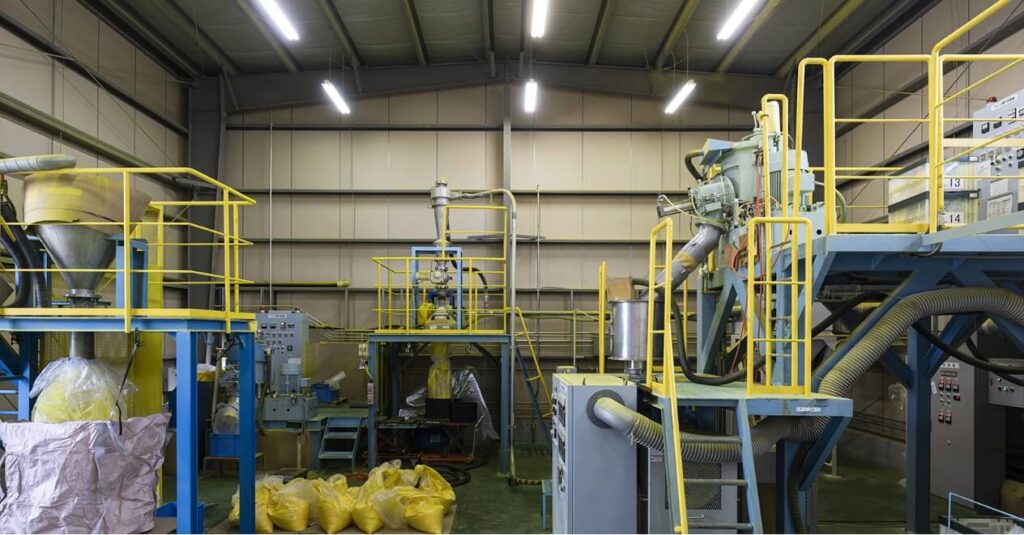
Overview of functional chemistry business
Since the immediate postwar period, Mikasa Sangyo has developed as a company providing agricultural materials and expertise to those engaged in agriculture. As part of this agriculture support, we began producing agricultural chemicals including pesticides and herbicides essential for crop cultivation, and that was the foundation of our current “fine pulverization technology.”
Through application of “fine pulverization technology,” our Functional Chemical Division handles manufacturing of recycled cartridge toner and OEM manufacturing of agricultural chemicals, while also focusing efforts on R&D in new fields.
About fine pulverization processing
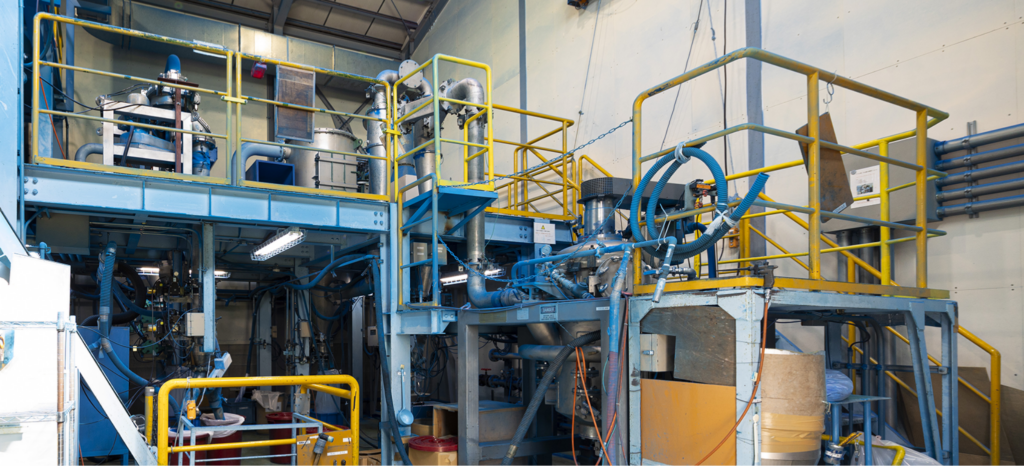

Features of fine pulverization processing
The level of precision required in material processing has become increasingly demanding due to the remarkable technological developments in recent years.
Against this backdrop, Mikasa Sangyo has focused on fine pulverization technology for over 30 years, cultivating cutting-edge precision and advanced technology while working to acquire expertise.
Based on long years of R&D and an extensive track record of contract work, Mikasa Sangyo utilizes various pulverizers, classifiers, and analyzers to provide higher-precision products by establishing pulverizing conditions that match needs, selecting appropriate machinery to be used, and applying utilization techniques.
[Selection of equipment to meet various requirements]
Based on physical properties such as raw material shape, melting point, glass transition point, hardness, molecular weight, and required product standards, we capitalize on our long years of experience to select the most suitable system for processing from our state-of-the-art machinery and equipment and thereby achieve efficient and economical processing.
- Processing
- Equipment
- Mixing
- High-speed flow-type mixers, etc.
- Kneading
- Small to large twin-screw extrusion kneaders
- Fine pulverization
- Jet-type and mechanical fine pulverizers
- Classification
- Mechanical and air-type classifiers
- Spheroidization
- Hot-air spheroidization equipment
Quality control
By leveraging technology cultivated through our many years of in-house product development, production, and contract processing, we carry out strict process management, and promise reliable quality control.
Confidentiality
Based on strict confidentiality management, we take full responsibility for protecting all confidential information, technologies, and other material provided by the customer for contract processing or development of various products, as well as all confidential matters including novel technologies and know-how newly developed through contract processing.
We believe contract processing is work built upon mutual trust between our customers and ourselves.
Enhancement of product functionality
We enhance product functionality by employing powder processing technologies such as mixing, fine pulverization, and classification. We will pursue even higher functionality by pioneering new applications of these added-value products.
About R&D
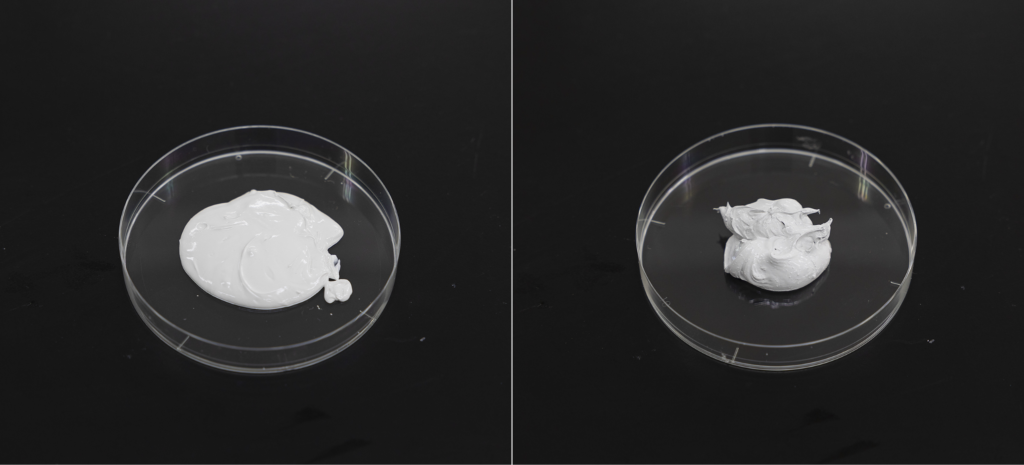
Powder surface treatment
At Mikasa Sangyo, we are focusing on future-oriented R&D based on pulverization technology cultivated through many years of development.
[Regarding our efforts and techniques for surface treatment of heat dissipating fillers]
In the final process of toner manufacturing, we control physical properties by adding fine-particle-size silica, titanium oxide, and other materials to the toner surface using a dry method. We focused on the fact that surface treatment can improve and modify the physical properties of powders, and can favorably contribute to adhesion and other properties through control of the interfacial conditions between materials. We believe that control of functional groups is particularly important and can serve as a key to understanding interfacial states.


As a commonly used surface treatment, there are silane coupling agents, but there are also cases where favorable treatment cannot be achieved, depending on the specific substance. Among these, substances called heat-dissipating fillers—typically aluminum nitride, boron nitride, aluminum oxide, and magnesium oxide—have very favorable physical properties, but also the disadvantage that surface modification cannot be performed well due to their deficiency of functional groups.
In light of the fact that surface treatment is essential for exhibiting functionality as a heat-dissipating material through more efficient dispersal in resin, we performed surface treatment on heat-dissipating fillers which are in high demand by utilizing toner surface treatment technology.
Heat dissipation in semiconductor devices has become essential amid the current trend of increasingly high integration, and in the present power device market, high thermal conductivity is required due to the need to prevent thermal runaway and degradation of electronic devices in next-generation automotive, energy, and communication applications. To dissipate heat from semiconductor devices, it is common to use a heat-dissipating sheet inserted as a single layer between the device and the heat sink, as shown in the schematic diagram below. This sheet is composed of resins such as epoxy or silicone, or grease, and is designed to dissipate heat by incorporating thermal conductive filler (inorganic powder) into the resin.


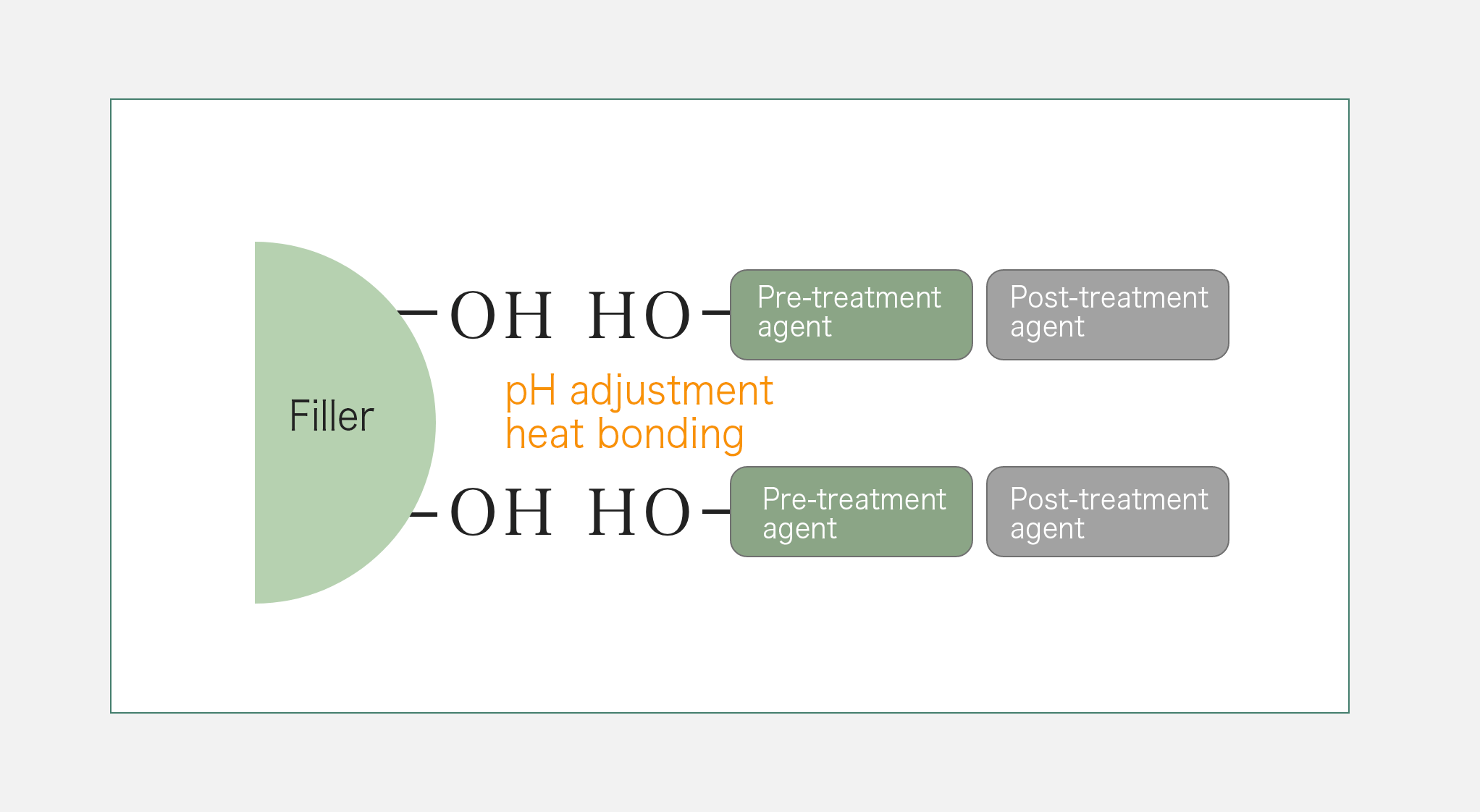

A uniform surface condition is created by adding a pre-treatment agent that has undergone pH adjustment, modification, or other similar treatment to the few hydroxyl groups, amino groups, or other groups on the filler surface, and orienting the hydroxyl groups with each other. Furthermore, the terminal portion of the pre-treatment agent reacts with the post-treatment agent, making it possible to achieve the desired surface status.


Conventional technology had low thermal conductivity due to low filling rates, but our patented technology achieves dramatically improved thermal conduction through high filling rates (thermal conduction simulation)
* Ideal curve for case with true spherical shape, fixed particle size, and no voids


This invention enables efficient thermal conductivity as voids (cavities) within the hybrid material are reduced and thermal conduction paths are more easily formed. This can not only to improve resin filling properties but also to enhance surface water resistance.


The graph shows that the reaction MgO+H2O→Mg(OH)2 progresses easily, and in untreated cases, magnesium ions are produced, resulting in high electrical conductivity. Our treatment, however, can keep electrical conductivity low better than silane coupling agents.
Other patents:
Patent No. 7376024 “Manufacturing Method of Water-Resistant Powder”
Patent No. 7468841 “Manufacturing Method of Boron Nitride Resin Composition”


Specifics of other research
[UVC wave absorbers / Inorganic oxide ultraviolet absorbers / Near-infrared shielding agents / Carbon dioxide absorbers]
Having gone through the COVID-19 pandemic, “virus elimination” and “sterilization” have become extremely important aspects of modern daily life.
Products such as equipment that can be effective at the DNA-damaging wavelength of 254 nm are being marketed and installed for use in indoor spaces and the like, but due to the short wavelength and high energy, these systems create problems such as yellowing of indoor walls.
While there are various ultraviolet absorbers and yellowing prevention agents that correspond to UVA (ultraviolet A waves) and UVB (ultraviolet B waves), there have previously not been any products specifically designed for UVC (ultraviolet C waves), and our company proposes yellowing prevention effects through ultraviolet absorption with polytungstate (see 1 below).
The ultraviolet absorber that is the subject of our company’s R&D is tungsten-based, and α-tungsten oxide can be produced through a special method. Furthermore, this oxide is a UV absorber with an absorption edge at 450 nm, and research results show it is capable of absorbing UVA, UVB, UVC and below, making it promising for industrial and cosmetic applications (see 2 below).
Also, hexagonal crystal tungsten oxide can be produced by simply changing the manufacturing method of the ultraviolet absorber, and since this oxide has outstanding near-infrared absorption capability, we believe this is a field that will expand in the future for applications such as heat-shielding paints.
1. Patent No. 7280647 “UV-C Absorber, Manufacturing Method of Its Main Agent, and Anti-yellowing Paint”
Patent No. 7280647 “UV-C Absorber, Manufacturing Method of Its Main Agent, and Anti-yellowing Paint”


2. Patent pending “Ultraviolet Blocking Agent Using Amorphous Tungsten Oxide”


3. Patent pending “Manufacturing Method of Near-Infrared Shielding Fillers”


[Carbon dioxide absorbers]
Existing carbon dioxide absorbers include amine-based liquids, amine-based solids, and alkaline aqueous solutions, each with their own advantages and disadvantages. The table below summarizes the advantages and disadvantages of each carbon dioxide absorber.


The developed carbon dioxide absorber is a safe substance with a core of iron oxide. Its absorption and emission amounts are on a par with amine-based solids, making it highly useful. For example, carbon dioxide is indispensable for photosynthesis in plants and, along with water and nutrients, is key to promoting growth. The typical usage amount in greenhouses is said to be 1 cylinder (30 kg) per day. The absorbed carbon dioxide can be released by heating to 80–90°C, enabling supply as a cyclical system.
Patent licensing agreement concluded with the Yamaguchi Prefectural Industrial Technology Institute

